Scissors – Back to School: A Smart Digital Download for Your DIY Projects
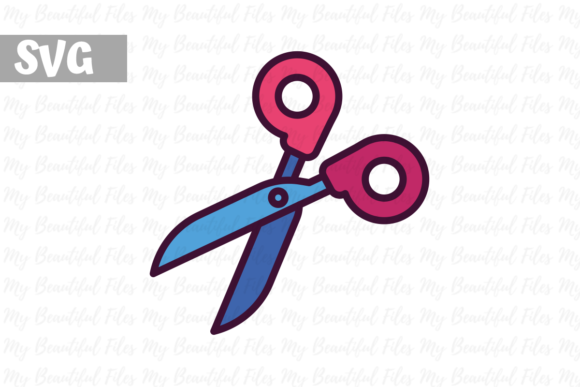
If you’re planning classroom decorations, back-to-school crafts, or any project that calls for a clean, scalable icon, the Scissors – Back to School digital download offers a ready-to-use SVG file that eliminates the need to draw your own. This scissors illustration is designed specifically for DIY use—think bulletin boards, homework folders, stickers, or custom stationery sets. The file you receive will be a high-quality vector without any watermark; the preview watermark you see on product images is there solely for copyright protection and disappears after purchase. Whether you’re a teacher sprucing up a classroom, a small business owner creating themed merchandise, or a hobbyist who enjoys Cricut or Silhouette projects, this download can save time and deliver crisp results.
But downloading a vector file is not always as straightforward as it seems. Many people jump in without checking a few key details, and those oversights can lead to wasted materials, extra effort, or a final product that falls short of expectations. Below are common mistakes I’ve seen (and made myself) when using digital SVG files for back-to-school designs, along with practical ways to avoid them. The goal is to help you get the most out of your Scissors – Back to School download from the very first use.
Mistake 1 – Assuming All SVG Files Are Equal in Quality
Not all SVG files are created with the same level of detail. A cheap or hastily created vector can have jagged curves, overlapping paths, or missing nodes. When you cut or print that file, the result might look rough, unprofessional, or even fail to cut properly. With the Scissors – Back to School download, the file is designed to be clean and optimized, but it’s still wise to check a few things before you commit a project to it.
What can go wrong: You import the SVG into your design software and the scissors icon appears broken—maybe the blades aren’t fully connected, or the handles are misshapen. You try to cut it on your vinyl cutter, and the machine moves erratically because of stray points. The final sticker or iron‑on looks like a cheap imitation instead of a crisp graphic.
How to avoid it: Before you start cutting, preview the file in a vector editor (like Inkscape, Adobe Illustrator, or even the free Silhouette Studio software). Zoom in to see if lines are smooth. If you notice any imperfections, you can often clean them up manually, but a high-quality download should be ready to go. The Scissors – Back to School file is built with clean geometry, so that step is usually unnecessary. But always test on a small scrap piece of material first, especially if you’re using it for a large run of identical items.
Mistake 2 – Letting the Watermark Confuse You
This is one of the most common hang-ups I hear about with digital downloads. People see the watermark in the product listing and assume it will appear on the files they receive. That confusion can lead to hesitation, and sometimes even to abandoning a perfectly good purchase. The Scissors – Back to School download is no exception: the preview image has a watermark to protect the designer’s work, but the downloaded SVG file is completely clean.
What’s the real concern? If you are new to buying digital files, you might worry that you won’t be able to use the icon commercially or that the watermark will show up in your final product. That can cause unnecessary anxiety and even lead you to search for a free alternative that ends up being lower quality.
Better approach: Understand that the watermark is a standard industry practice. Once you purchase and download the file, you own a license to use it (check the specific terms, but most allow personal and small commercial use). Open the downloaded ZIP folder, extract the SVG, and use it immediately without any overlay. If you are ever unsure, look for the seller’s “What’s Included” section—it will explicitly state that watermark-free files are delivered.
Mistake 3 – Ignoring File Format Compatibility
SVG is one of the most universal vector formats, but not every cutting machine or design program handles it exactly the same. Some older machines may require a different format (like DXF or EPS), and some software might not preserve layers or colors correctly. If you assume your setup will work perfectly without checking, you could spend an hour troubleshooting instead of crafting.
Example: You purchase the Scissors – Back to School SVG and try to upload it directly to a basic Cricut Explore Air 2 via the Design Space app. The scissors icon looks fine in preview, but when you go to cut, the machine fails to recognize the outer cut line. This happens because the file uses a fill layer that the software interprets as a print‑then‑cut image instead of a simple cut.
Practical fix: Before you finalize your project, verify that your device or software handles SVG files natively. For Cricut, you can usually upload an SVG without issues, but ensure that the file is set to “cut” rather than “print.” For Silhouette, you may need to open the SVG in Silhouette Studio and adjust the cut settings. If you’re using a laser engraver, check whether the machine expects a specific stroke color. Most modern machines handle SVG with ease, but a quick test cut on scrap paper will save you from wasting premium vinyl or cardstock.
Mistake 4 – Overlooking Scalability and Intended Use
A great mistake is thinking that any vector can be scaled to any size without quality loss. While vector files are resolution‑independent, the level of detail in the original design still matters. The Scissors – Back to School icon is an illustration, not a photograph—it has distinct shapes that look crisp at almost any scale. But if you try to blow it up to poster size without adjusting line thickness, the thin handles might become too delicate, or the inner cutouts might disappear.
Real‑world scenario: A teacher downloads the scissors icon for a classroom banner and scales it to 24 inches wide. On screen it looks fine, but when printed, the interior of the handle holes are almost invisible because the stroke width stayed the same. The final banner seems clunky, and the scissors icon loses its familiar silhouette.
Better plan: When you intend to use the file for a large‑format project, test the scaling in your software first. If the design has thin lines or small internal openings, consider using the SVG as a starting point and then adding a thicker stroke or a solid version. For most standard uses—stickers, labels, iron‑ons, or paper crafts—the included SVG will work beautifully at sizes from 1 inch to 12 inches without modifications. And if you need a version with a solid fill instead of an outline, you can easily close the paths in a vector editor.
Mistake 5 – Not Checking the License Before Selling or Sharing
Many digital downloads come with clear licenses that dictate how you can use the artwork. The Scissors – Back to School file is typically offered for personal and small commercial use—meaning you can use it to make products for sale (like stickers or classroom decor) but you cannot resell the digital file itself. Unfortunately, people sometimes ignore these terms and end up accidentally violating copyright, or they are overly restrictive and miss out on legitimate commercial opportunities.
What happens if you skip this step: You create a popular line of back‑to‑school stationery featuring the scissors icon and start selling on Etsy. The seller of the original file may ask you to stop or require you to purchase an extended license. Alternatively, you might assume you cannot use it for any paid project at all, so you spend hours redrawing a similar icon when you already had permission to use the download.
How to proceed: Read the brief license information provided on the product page or download page. Look for phrases like “personal use only,” “commercial use allowed,” or “limit of 500 products.” Many designers are very reasonable and allow small‑scale commercial use without an extra fee. If you plan to mass‑produce or use the icon in a widely distributed item (like a published ebook), contact the designer to confirm or purchase a commercial license. Respecting the license also ensures you get continued access to updates and support.
Putting It All Together for a Smooth Crafting Experience
Digital downloads like Scissors – Back to School offer incredible convenience—no need to draw or scan, just download and create. But a few minutes of upfront checking can make the difference between a frustrating session and a satisfying project. Preview the file for quality, understand the watermark, confirm compatibility with your machine, test scale for your intended use, and review the license. These small steps cost very little time but protect your materials, your budget, and your creative momentum.
Once you have those bases covered, you can focus on the fun part: layering vinyl, picking the perfect cardstock, or designing a set of matching stickers for the new school year. The scissors icon itself is versatile—use it for labels, reward charts, binder covers, or even as part of a larger back‑to‑school bulletin board. And remember, the watermark you saw in the listing is gone after download, so you can craft with confidence. Happy crafting!