Out of Quarantine Back to School Bundle: A Practical Guide for Creators, Educators, and Small Business Owners
Back-to-school season has always been a busy time for creators, educators, and small business owners. But after extended periods of remote learning, shifting routines, and changing classroom environments, the need for reliable, flexible design assets has never been greater. The Out of Quarantine Back to School Bundle is a curated collection of digital files designed to help you produce consistent, high-quality materials without starting from scratch. Whether you are preparing classroom decorations, building a product line for your shop, or organizing personal projects, this bundle offers a practical foundation.
This article walks through what the bundle includes, how it fits into real workflows, and how to get the most out of each file type. The focus is on practical implementation, not hype.
What the Out of Quarantine Back to School Bundle Contains
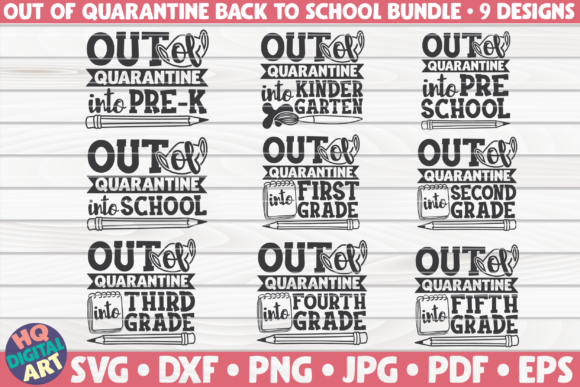
The bundle delivers nine distinct illustrations, each provided in six common file formats. Once your order is placed, you receive archived files containing:
- 9 DXF files
- 9 PDF files
- 9 SVG files
- 9 PNG files at 300 ppi with transparent backgrounds
- 9 JPG files
- 9 EPS files
Each format serves a specific purpose. Having them all in one download eliminates the need to convert or hunt for missing formats later. The illustrations themselves are higher quality than what preview images suggest, which matters when you are scaling, printing, or cutting at larger sizes.
Where This Bundle Fits in Your Workflow
Design assets like these are most useful when they integrate cleanly into an existing process. Whether you are a hobbyist working on a single project or a small business owner producing inventory, the bundle can be used at several stages:
Before a Project: Planning and Preparation
When you are mapping out a back-to-school campaign, classroom theme, or product line, having a consistent visual style saves time. Browse the SVG or PNG files to see which illustrations match your color palette or concept. Because all files come from the same set, you can mix and match without worrying about inconsistent line weights or resolution mismatches. Use the PDF files to print reference sheets for team members or clients before committing to final production.
During a Project: Production and Assembly
Once your plan is set, the real work begins. If you are using a cutting machine like a Cricut or Silhouette, the SVG and DXF files are your primary tools. Import them directly into Design Space or Silhouette Studio Designer Edition (or higher) and adjust size as needed. The PNG files with transparent backgrounds are ideal for layering into digital documents, social media graphics, or classroom handouts. The EPS files work well in vector editing software like Adobe Illustrator or Corel Draw when you need to modify colors or combine elements.
After a Project: Archiving and Reuse
One often overlooked part of any creative workflow is archiving. The bundled files are easy to store and retrieve for future seasons. Because the bundle includes multiple formats, you are covered whether you switch software, upgrade hardware, or need to share files with a collaborator who uses a different platform. Keep the original archived folder intact, and pull individual files as needed. This prevents the common problem of losing the editable version after exporting a final product.
File Format Breakdown and When to Use Each
Understanding the strengths of each format helps you work faster and avoid errors. Here is how these file types typically perform in real-world use:
SVG Files
SVG (Scalable Vector Graphics) files are the most versatile for cutting and digital design. They scale without losing quality, which is essential when you need a small sticker one day and a large wall decal the next. Use SVGs with Cricut Design Space, Silhouette Studio (Designer Edition or higher), Inkscape, or Adobe Illustrator. They also work well in web and social media graphics because of their small file size and crisp rendering.
DXF Files
DXF (Drawing Exchange Format) files are widely used in CAD and cutting software. They are particularly reliable for Silhouette users who need precise cut lines. If you experience unexpected behavior with an SVG in a specific program, try the DXF version instead. Many professionals also keep DXF files as a fallback for compatibility with older software versions.
EPS Files
EPS (Encapsulated PostScript) files are a standard in professional print and vector editing. If you work in Adobe Illustrator, Corel Draw, or similar programs, EPS files allow deep editing of paths, colors, and layers. They are also useful when sending files to a print shop that requires vector formats. Keep the EPS files for any project that might need future revisions.
PNG Files (300 ppi, Transparent Background)
These are your go-to for digital use. The transparent background means you can place the illustration directly onto a colored background, a photo, or a patterned paper without extra masking. At 300 ppi, they are print-ready for most home and small-shop printers. Use them for social media posts, classroom worksheets, product mockups, or printable decor. They also serve as preview images when you are selecting which SVG or EPS file to edit.
PDF Files
PDFs are the most universal format for sharing and printing. Use them to send proofs to clients, print quick samples, or include in digital planners and documents. They are also a safe choice when you are unsure which software your collaborator uses. PDFs from this bundle preserve the vector quality, so they can be scaled up for posters or banners if needed.
JPG Files
JPGs are useful for quick previews, low-resolution drafts, or web use where file size matters. They are not ideal for final print at large sizes due to compression, but they work well for emails, blog posts, and social media thumbnails.
Compatibility and Software Considerations
This bundle is designed to work across a range of software and hardware. Before you start, confirm that your tools support the file types you plan to use:
- Cricut Design Space: SVG, DXF, PNG
- Silhouette Studio Designer Edition or higher: SVG, DXF, EPS
- Inkscape: SVG, EPS
- Adobe Illustrator: SVG, EPS, PDF
- Corel Draw: EPS, SVG, PDF
- Sure Cuts A Lot (SCAL): SVG, DXF, EPS
If you are using a free or basic version of Silhouette Studio, note that SVG and DXF import may require the Designer Edition upgrade. The EPS files are also accessible through Inkscape and Adobe Illustrator, making them a good bridge format when moving between programs.
One practical tip: always open a test file in your primary software before starting a large batch. Check for any unexpected strokes, fills, or scaling issues. The illustrations in this bundle are cleanly constructed, but previewing one file saves time if your software interprets something differently.
For Classroom Teachers and Educators
Back-to-school involves dozens of materials: name tags, bulletin board letters, schedule cards, reward charts, and door decorations. Use the SVG files to cut laminated shapes or cardstock pieces that can be reused year after year. The PDF versions are excellent for printing quick worksheets or coloring pages. Because the bundle includes nine distinct illustrations, you can assign specific graphics to different areas of your classroom for visual organization. Keep a folder on your desktop labeled with the school year and pull the same set each August.
For Small Business Owners and Etsy Sellers
If you run a shop selling digital or physical products, consistency across your listings builds brand recognition. Use the PNG files with transparent backgrounds to create mockups, social media teasers, and product previews. The SVG and EPS files allow you to customize colors to match your brand without redrawing anything. Consider creating a few variations of each design (e.g., different colors or sizes) from a single source file. This speeds up inventory production and ensures quality control across your entire product line.
For Bloggers and Content Creators
Seasonal content requires fresh visuals. Use the JPEG or PNG files for blog post headers, pin images, and social media graphics. The transparent-background PNGs are especially useful when you want to layer illustrations over photos or textured backgrounds. Because the bundle is back-to-school themed, you can plan a series of posts around routines, organization tips, or classroom DIYs, all featuring consistent artwork.
For Hobbyists and DIYers
Personal projects often have tighter timelines and smaller budgets. Having a ready-to-use bundle means you skip the design phase and move straight to making. Use the DXF or SVG files in your cutting machine to produce custom gifts, party decorations, or home organization labels. The high-quality PDFs can be printed at home for scrapbooking, journaling, or kids' activities. Because the files are archived together, you can revisit them any time without searching through old downloads.
Workflow Integration: A Real Example
Imagine a small business owner preparing a back-to-school sale. The process might look like this:
- Planning: Review the nine illustrations in the bundle and select three that match the product theme. Open the PNG previews to confirm scale and style.
- Customization: Import the EPS files into Adobe Illustrator. Adjust colors to match the brand palette. Save as new SVG files for cutting and new PNG files for digital mockups.
- Production: Load the SVGs into Cricut Design Space and cut iron-on vinyl for tote bags. Print the PNGs at a local print shop for notebook covers.
- Marketing: Use the transparent PNG files to create Instagram posts and Etsy listing photos. The consistent artwork reinforces the collection's identity.
- Archiving: After the sale, save the customized files alongside the original bundle. Next year, you can adapt them with minor tweaks instead of starting over.
This flow reduces decision fatigue, eliminates format conversion delays, and keeps the focus on execution.
Quality Control and Long-Term Use
One of the strongest aspects of a well-prepared bundle is consistency over time. Because all nine illustrations share similar line quality and style, materials produced today will look cohesive with materials produced months later. This is especially important for businesses and educators who build on previous work.
To protect your investment:
- Store the archived files on a reliable cloud service or external drive.
- Rename the folder with a clear date and theme (e.g., "2025_BackToSchool_Bundle") so you can find it quickly.
- If you modify any files, save a copy of the original before overwriting. This gives you a clean starting point for future seasons.
- Test a sample print or cut on inexpensive material before using your final supplies. This catches any scaling or alignment issues early.
The illustrations in this bundle are deliberately higher quality than what preview images show. Do not judge the final output by the thumbnails. Open a file at full size in your software to see the true line clarity and detail.
Final Observations
The Out of Quarantine Back to School Bundle is not just a collection of pretty graphics. It is a practical set of tools that fits into the preparation, production, and archiving stages of creative and professional work. Its strength lies in the variety of file formats, the consistency of the illustrations, and the ability to work across multiple software ecosystems. Whether you are a teacher setting up a classroom, a business owner launching a seasonal product line, or a creator building content for your audience, this bundle removes friction from the design process and lets you focus on the actual task at hand.
Take a few minutes to organize your files before you start your first project. The upfront effort pays back in time saved later, especially when you are working under the tight deadlines that back-to-school season always brings.